The wiring problem may have appeared inside your apartment, but the electrical route does not necessarily stop at your front door. A quote needs to distinguish the circuits within the unit from the supply and equipment that serve it.
NYC Knob & Tube Experts plans and manages apartment rewiring throughout New York City. Licensed and insured contractors perform the electrical work. We help turn an inspection finding or stalled repair into a proposal that accounts for the building as well as the apartment.
What exactly is being rewired?
An apartment contains branch circuits supplying its lights, receptacles and equipment. Those circuits may be fed from a panel within the unit, but the location and arrangement vary. The feeder supplying that panel is a separate part of the system.
If the proposal replaces the apartment’s branch wiring, it should say whether the feeder and panel are included or retained. Adding a new panel does not replace the old wires running from it to the rooms. Equally, replacing those room circuits does not necessarily increase the electrical capacity available to the apartment.
This distinction becomes important when the renovation includes new appliances. The electrician needs their actual requirements and the intended use of the space. A building-wide supply limitation cannot be resolved simply by installing more outlets inside the unit.
When does the managing agent need to be involved?
Early, if the work needs access outside the apartment or depends on building equipment. Explain the proposed work and request the building’s current alteration requirements. Different buildings have different arrangements, so a rule from a neighboring property may not apply to yours.
In a co-op or condominium, the governing documents and alteration agreement can affect responsibility and authorization. For a rented apartment, the owner or authorized managing party needs to be involved in decisions about the installation. Do not arrange changes to shared equipment on the assumption that an apartment-only contract authorizes them.
Building approval does not replace NYC electrical requirements. The responsible licensed electrical contractor should identify the applicable filings and inspection obligations. NYC DOB owner electrical checklist.
Why a small repair can become a larger discussion
A faulty light fitting may expose brittle insulation on the conductors supplying it. Moving those wires to fit a new device can reveal deterioration that was not visible before. A new device would not repair that upstream condition.
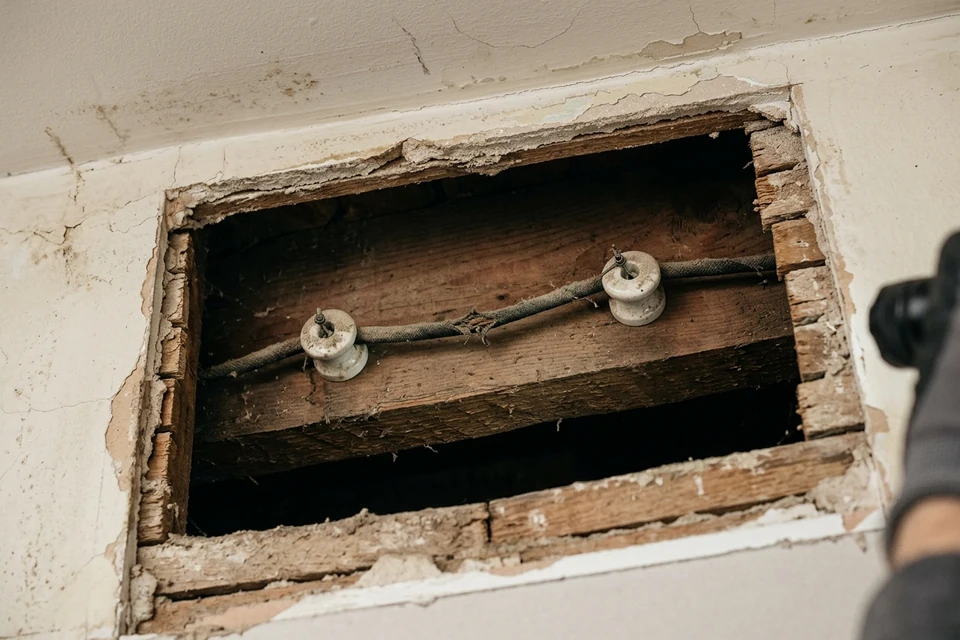
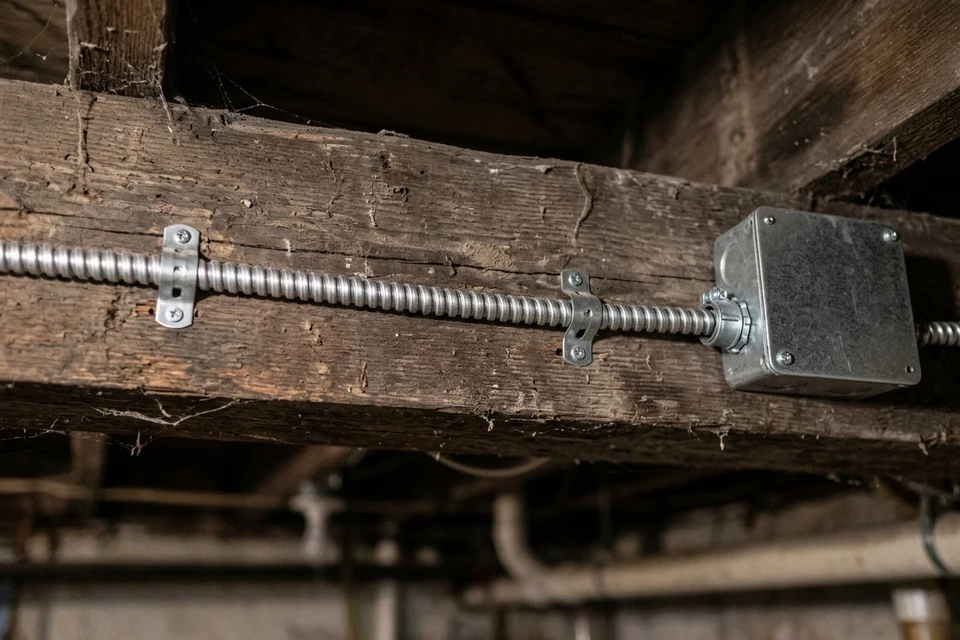
The electrician may also find a modern cable connected to an old circuit. That connection needs assessment as part of the installation, rather than being treated as proof that the room was fully rewired. The old-to-new wiring guide explains why the transition matters.
Some electricians will decline a patch while being willing to replace the affected circuits. Others may decline the project because the required access cannot yet be arranged. Tell us what happened on the previous visit. Knowing whether the obstacle was the wiring or the building arrangements helps avoid another inconclusive appointment.
Replacing one room versus the whole apartment
A limited job may be appropriate if the electrician can establish a suitable boundary and assess the wiring that remains. It should not be limited merely because the renovation drawing marks one room in a different color.
If an old circuit supplies the bathroom and lighting elsewhere, replacing its bathroom section leaves another part of that circuit to consider. The plan needs to explain how the new wiring will be supplied and what will happen to the lighting that remains outside the renovation.
A broader replacement may make sense when defects are found across the unit, or when the renovation will disturb much of the existing wiring. The findings should explain that recommendation. Ask the contractor to distinguish necessary replacement from optional changes to device positions or lighting design.
Planning access without assuming the ceiling is empty
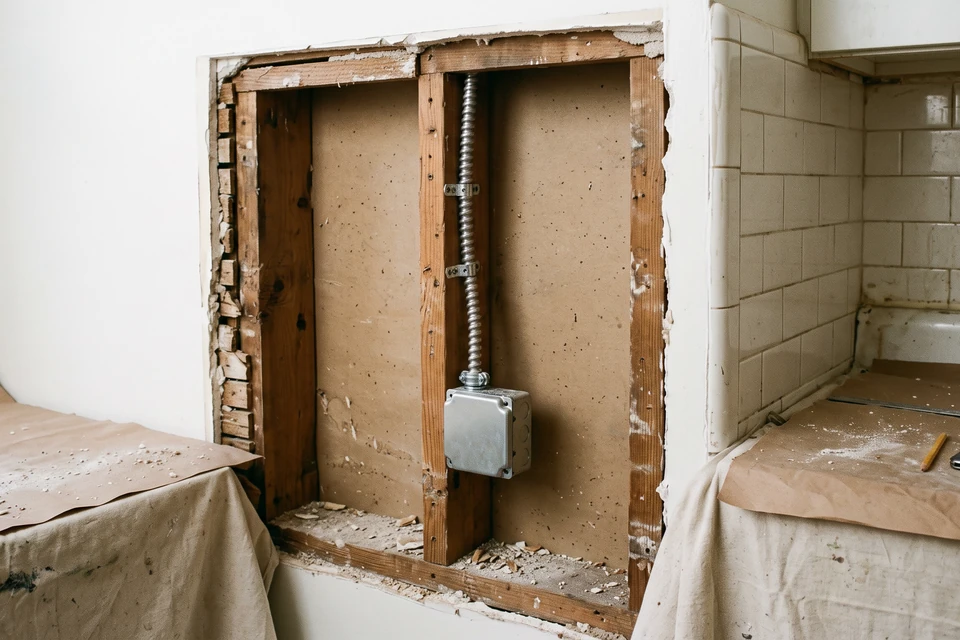
Suspended ceilings, service spaces and existing openings can sometimes provide useful access. They do not establish that a suitable continuous route exists. Structural elements and other services can affect where the wiring can go.
Before cutting, agree which surfaces may be opened. If a route needs entry into a common area or another unit, that permission has to be arranged separately. The contractor should also explain what happens if the intended path is blocked.
Finish repair belongs in the written proposal. A quote that includes closing electrical openings may still exclude decorative plaster or repainting. Older materials may need assessment before disturbance, particularly where suspect asbestos-containing material or lead-painted surfaces could be affected.
Has the apartment work stopped over an unresolved wiring question? Tell us what was found, and whether the building has issued any alteration requirements.
Can you remain in the apartment?
That depends on the planned work and the arrangements the contractor can establish. The electrician needs to identify when power will be interrupted and whether a safe stopping point is available at the end of each stage.
Explain any equipment that must remain powered. Access to essential facilities also needs to be considered. A schedule that works in an empty unit may not work while someone is living there, so occupancy should be discussed before the price and programme are settled.
Do not assume a collection of extension cords will solve the interruption. Temporary electrical arrangements need appropriate planning. If the apartment cannot be used during a particular stage, that should be made clear while you can still arrange an alternative.
The occupied-apartment guide covers the coordination questions in more detail.
What should be included in the apartment proposal?
| Item | What needs to be clear |
|---|---|
| Circuit coverage | Which lights, outlets and fixed equipment are included |
| Retained equipment | Whether the panel and feeder will remain |
| Building involvement | Access or approvals needed outside the unit |
| Work restrictions | Applicable building arrangements and their effect on scheduling |
| Openings | Expected locations and the process for agreeing changes |
| Finish repair | Who completes the wall and ceiling restoration |
| Electrical approvals | Responsible contractor and applicable filing/inspection work |
| Handover | Circuit identification and a record of any old wiring still active |
An insurer may ask a different question from the managing agent. If either requires documentation, provide the actual wording before commissioning a report. A statement about the apartment does not certify the whole building.
Start with the finding and the building requirements
Have the inspection report available, together with previous electrical records if you have them. Bring the appliance or renovation plans when the layout is changing. If nobody yet knows how much K&T is connected, begin with an electrical assessment rather than asking for a firm replacement price based only on the apartment’s floor area.
Discuss your apartment rewire. We cover all five boroughs, including work that has been delayed by uncertainty about the building connection or difficulty finding a contractor willing to take on the replacement.
A closer look at wiring and access