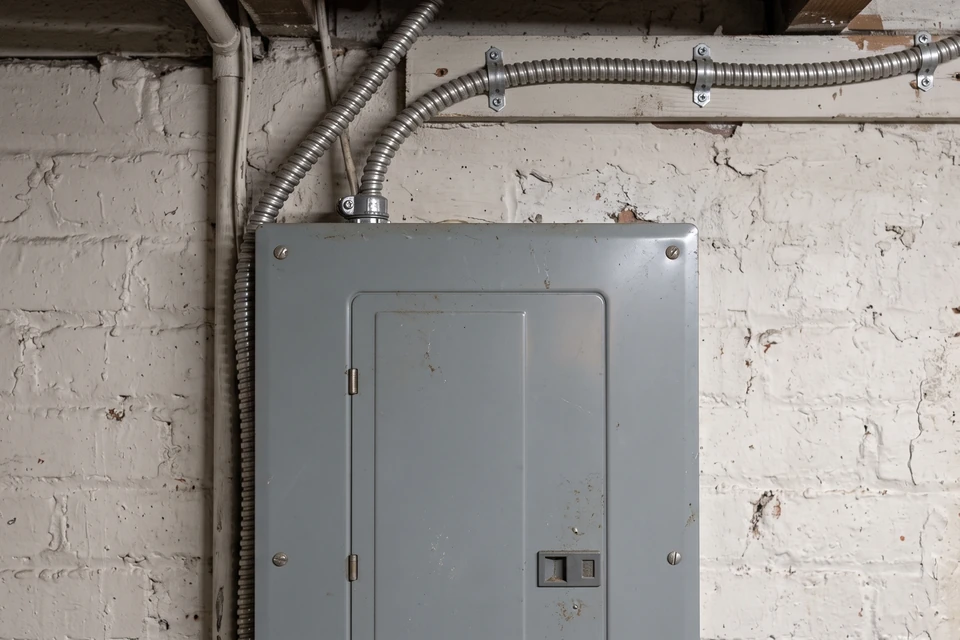
You have been told the panel needs replacing. You may also have knob and tube in the house, and it is not obvious whether one job takes care of the other. It does not: the panel distributes electricity, while the branch wiring carries it through the property.
NYC Knob & Tube Experts manages panel work where it is needed as part of an assessed electrical project. Licensed and insured contractors perform the installation. We establish the relationship between the panel and the wiring it will continue to supply before presenting an upgrade as the solution.
What a new panel changes
A panel houses the equipment that distributes and protects the circuits. Replacing it may address the condition or suitability of that equipment. It can also be part of a larger installation designed for the property’s assessed demand.
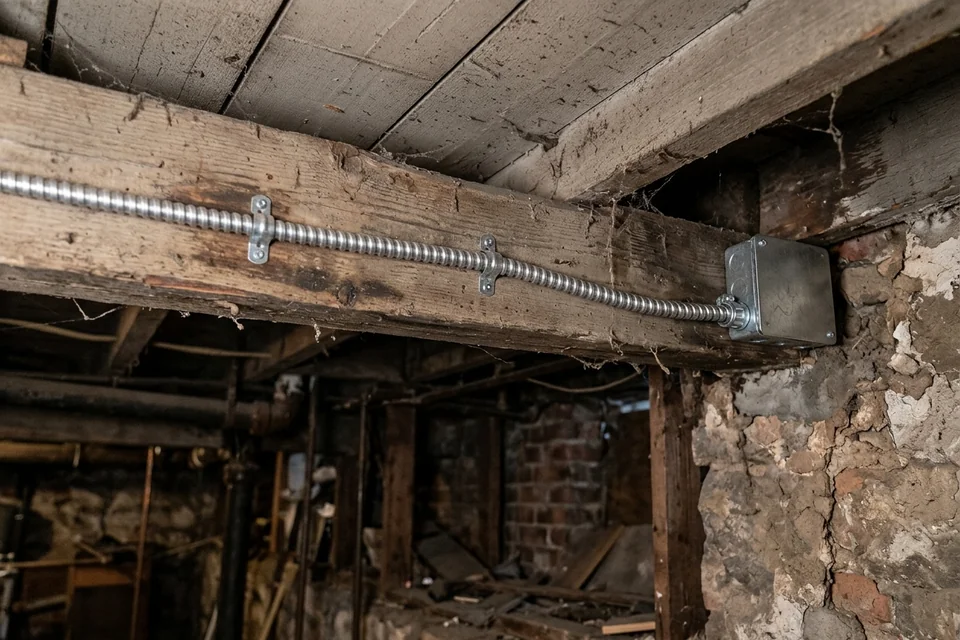
The wires leaving it do not become new when the panel changes. A modern breaker can still supply a deteriorated old circuit. That distinction is especially important when a sale listing describes a property as “electrically updated” because the panel looks recent.
Ask which branch circuits are included in the proposal. If they are being retained, the electrician needs to consider their condition and compatibility with the new equipment. A panel-only price should not be described as the price to remove K&T throughout the house.
Panel size and service capacity are separate questions
The electrical service brings power into the property. The panel distributes it. Although a project may replace both, a panel replacement is not automatically a service-capacity upgrade.
Tell the contractor about the equipment you intend to use, particularly planned changes within the current renovation. The electrician can assess the building’s demand and the existing supply. The aim is a justified installation, rather than the largest number printed on a panel label.
If a service change is needed, the utility connection may require coordination outside the immediate panel work. That can affect the sequence and the date on which the new arrangement can be used. Ask for those dependencies to be identified before relying on a completion date. Our 200-amp service guide explains why that rating is not a universal requirement.
Repeated trips need investigation
A breaker opening repeatedly can reflect excessive load or a fault. It should not be treated as a request for a larger breaker. Increasing a protective-device rating without an appropriately designed circuit can leave conductors inadequately protected.
Several outlets may share one circuit, so an appliance plugged into another room can still contribute to the same load. The electrician needs to establish the circuit arrangement and investigate the reason for the trips. A new panel would not change that arrangement unless branch work is also included.
Do not keep resetting a device that trips or bypass the protection. Report the circumstances to the electrician. If there is smoke, active sparking or fire, leave the affected area and call 911 from a safe place. ESFI fuse and breaker guidance.
Protective devices must suit the actual circuits
Modern protection involves more than matching a breaker to an empty slot. The equipment must be suitable for the panel and the circuit it serves. Existing neutral arrangements can affect which protective devices can be used.
An altered older installation may contain shared or interconnected neutrals that need tracing. That is not an inherent feature of every K&T system. It is a reason to establish the actual conductors before assuming a particular AFCI or GFCI device will work correctly.
Ground-fault and arc-fault protection also perform different jobs. Neither restores damaged insulation. The AFCI and GFCI guide explains those distinctions without treating a device upgrade as a substitute for necessary replacement.
Have a panel quote but still no answer about the old wiring? Talk to us about both parts of the recommendation. They need to be understood together.
What happens during the assessment?
The electrician needs to examine the accessible equipment and identify the circuits involved. Existing records can help, especially if earlier work changed only part of the installation. Planned equipment loads should be considered alongside the present use.
Where K&T is connected, the assessment needs to establish what work is appropriate before it is reconnected to replacement equipment. That may lead to branch replacement as part of the same project. It should be explained as a finding-driven decision, rather than hidden in a vague allowance.
The proposed location and access arrangements matter too. Working space and the route to associated equipment must be assessed under the applicable requirements. In an apartment building, the equipment may be outside the unit or under building control. Authorization and access therefore need to be settled early.
Separate the proposal into understandable parts
| Proposed work | What to ask |
|---|---|
| Panel replacement | Which equipment is being replaced and why? |
| Branch rewiring | Which circuits are renewed, and which remain? |
| Dedicated circuits | Which specific loads will they supply? |
| Service upgrade | What assessment supports it, and what utility work is involved? |
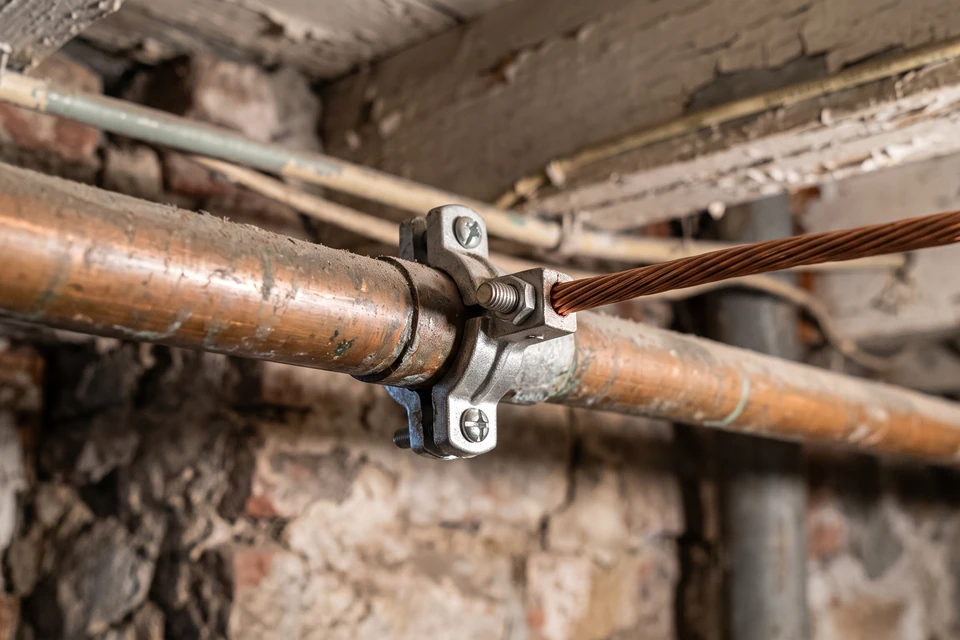
| Grounding and bonding | Which deficiencies or installation requirements will be addressed? |
| Approvals and testing | Who handles the applicable filings, inspection and completion records? |
The responsible NYC licensed electrical contractor should identify the permit and inspection requirements. Building permission, where needed, is a separate part of the project. NYC DOB owner electrical requirements.
Plan the interruption before work begins
Panel work can affect several circuits at once. Agree which areas will lose power and how the contractor expects the sequence to work. If the property is occupied, explain any essential equipment or access constraints before scheduling.
Temporary power cannot be assumed simply because the job is expected to be short. The electrician needs to determine what is suitable, with building or utility involvement where applicable. The written plan should distinguish active installation time from outside dependencies.
At handover, the circuit identification should make the new arrangement understandable. Keep the inspection and completion records with a description of any old branch wiring that remains. That is more useful to a future owner than a photograph of a new panel door.
Discuss the proposed panel upgrade. If your main concern is retiring K&T, bring that question to the assessment explicitly so it does not disappear behind the panel specification.
A closer look at wiring and access