An inspection report says “cloth wiring,” and now you are trying to find out whether that means knob and tube. It might, but the covering alone does not identify the wiring system. Different older cables can have fabric on the outside or around individual conductors.
NYC Knob & Tube Experts arranges assessment and manages replacement of older wiring across the city. Licensed and insured contractors perform the electrical work. The first step is to establish what is installed and why replacement has been recommended.
Why the distinction matters
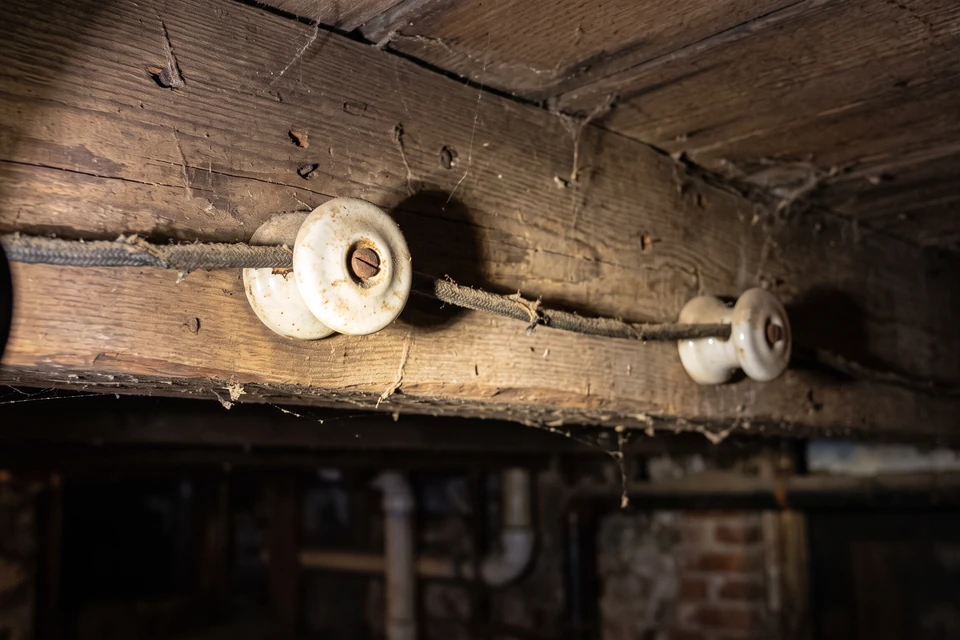
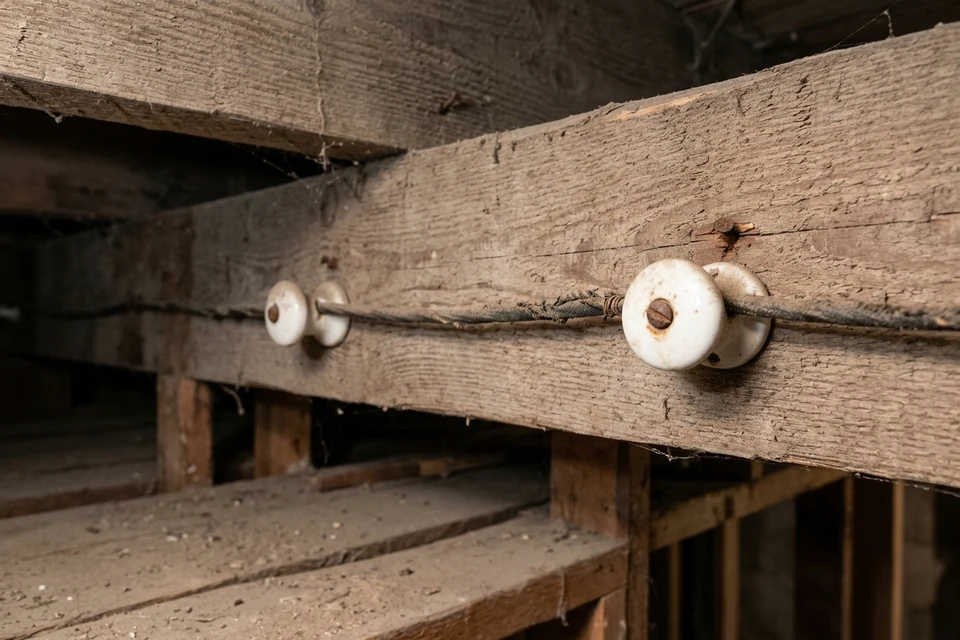
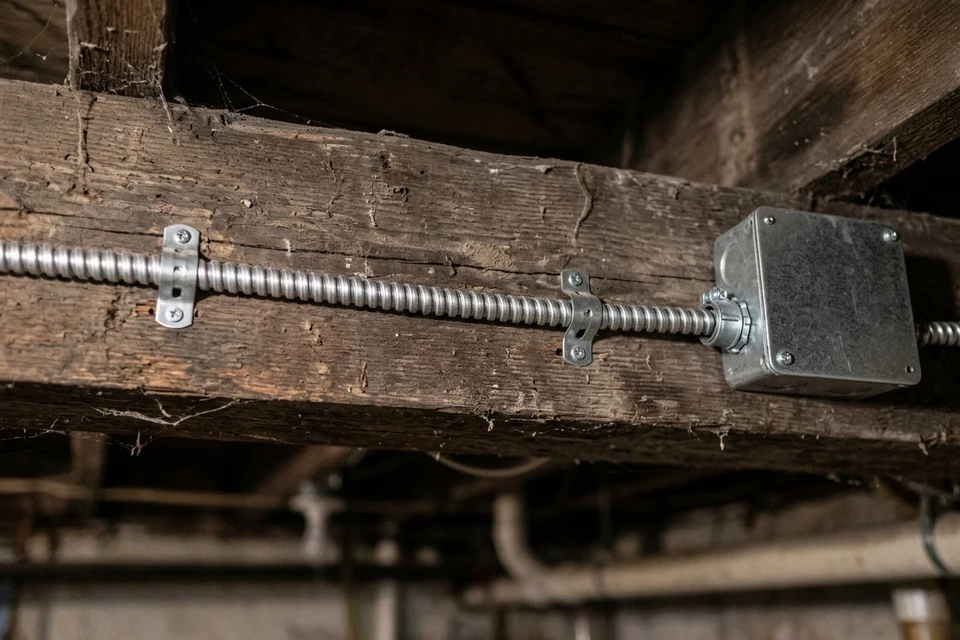
Knob and tube uses separate insulated conductors supported on ceramic hardware. An older cable can instead contain conductors grouped together inside a covering. Armored cable has a metal exterior, while some earlier nonmetallic cable has a fabric-based outer covering. They are different wiring methods, even when exposed material looks similar.
The difference affects what the electrician needs to examine. With K&T, the condition of the separated conductors and their supports matters. With a cable assembly, its type and the condition of the conductors inside it need to be established. The route may also change from one wiring method to another behind finished surfaces.
HUD’s rehabilitation inspection guide distinguishes these older systems, including cloth-covered nonmetallic cable and AC/BX. It is useful for understanding the categories, rather than treating any old cable as suitable under current NYC requirements. HUD rehabilitation inspection guide.
Our cloth wiring versus K&T guide explains the clues without asking you to open equipment.
Is a frayed fabric covering the electrical insulation?
Not always. Some visible fabric serves as an outer covering, with insulation beneath it. In other arrangements, fabric forms part of the covering over an insulated conductor. A photograph of fraying therefore cannot establish the condition of every layer.
That does not make fraying irrelevant. It gives the electrician a reason to identify the assembly and examine the accessible material. Rubber beneath a covering can become brittle, especially where it has been exposed to heat or disturbance. Moving a wire may reveal damage that was not obvious while it remained still.
Do not peel back the fabric to see what is underneath. That can damage the insulation or expose energized metal. Use photographs you already have and leave further examination to the contractor.
What does the assessment need to establish?
The electrician should identify the accessible wiring method and determine whether the affected section is active. The route then needs enough investigation to understand what supplies it and what it supplies in turn.
Device replacement can leave much of that story unresolved. A modern receptacle attached to old conductors is still supplied by those conductors. A new cable visible in one room may transition to a different system upstream. The condition at the transition matters as well as the age of each section.
Ask the report to distinguish observed defects from unresolved questions. “Old cloth wire” describes an observation. Cracked insulation exposing a conductor, or a damaged connection, describes a more specific finding. A useful recommendation explains why the proposed work addresses what was found.
| Finding | What needs clarification |
|---|---|
| Fabric visible at a fitting | Which wiring method is present and what lies beneath the visible covering |
| Armored cable entering a box | The cable type, connections and actual grounding arrangement |
| Old and new wiring together | Where they connect and what remains upstream |
| Apparently unused wire | Whether disconnection has been professionally verified |
| Brittle or damaged insulation | How far the affected material extends and whether it can remain undisturbed |
Grounding cannot be judged from the outlet face
Older wiring may lack an equipment-grounding conductor. A three-slot receptacle does not prove that one is present. Metal armor also needs assessment as part of its actual cable assembly and connections, rather than being assumed to provide an effective path simply because it is metal.
Certain permitted GFCI replacement arrangements can provide ground-fault protection on an ungrounded circuit. They remain ungrounded and require the applicable treatment and labeling. That protection does not rebuild deteriorated wire insulation. Leviton on non-grounding outlets.
If grounding is part of the recommendation, ask which wiring would be replaced or otherwise corrected. Our grounding service explains the questions to resolve.
Replacing the affected wiring
A limited replacement may be possible when the contractor can establish a suitable stopping point and assess what remains. If the same deteriorated material is found across several circuits, changing the short section visible at one fitting may leave the wider problem unresolved.
The replacement method has to suit the building and current NYC requirements. Do not assume the material used in a national renovation video is permitted throughout New York City. The city’s electrical code includes local restrictions on wiring methods, including nonmetallic cable. The contractor should explain what will be installed in your property. NYC Electrical Code.
Where a quote retains older wiring, have the retained portion identified. That helps you understand the limits of the work and gives a later contractor something more useful than an invoice saying “wiring upgraded.”
Told the cloth wiring needs to go, without a clear explanation? Send us the wording of the finding. We can discuss what the next assessment needs to establish.
Planning access and checking suspect materials
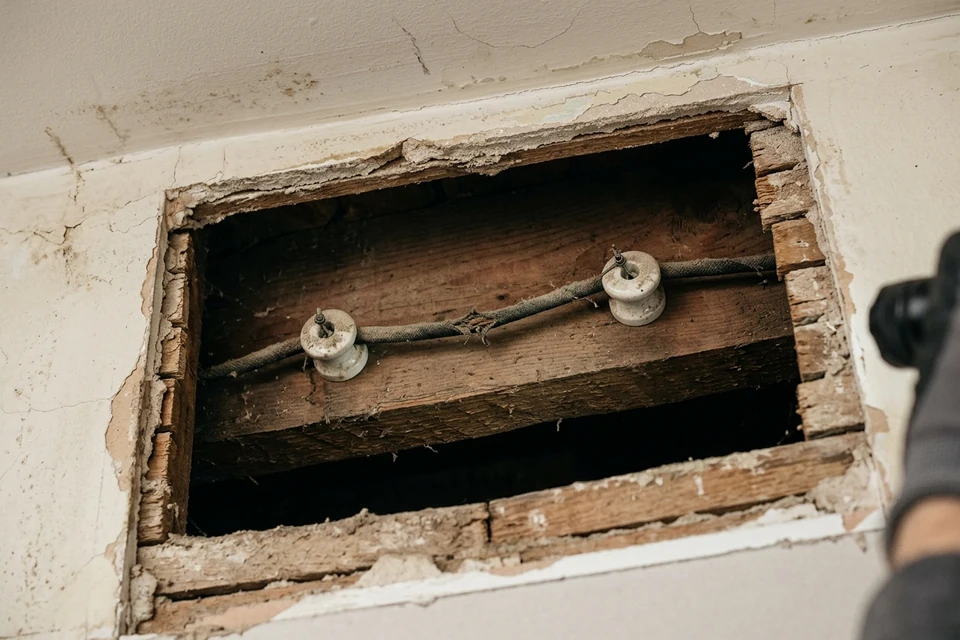
The visible section may be accessible while the circuit beyond it is concealed. Ask which openings are expected and who will repair them. If replacement follows a renovation, the electrical route should be agreed before new finishes close it.
Cloth covering does not prove that a material contains asbestos. Appearance cannot settle that question. Suspect material that will be disturbed needs appropriate assessment. EPA advice on asbestos during remodeling.
Older painted finishes may bring separate lead-safe work requirements into the project. Those requirements depend on the work and applicable exceptions. EPA renovation guidance.
If an insurer requested the work, obtain the exact request. The phrase “cloth wiring” may have been used loosely in a report, while the insurer’s actual condition concerns a particular system or all active old wiring. The contractor’s documentation should accurately describe what was identified and completed. It should not claim that everything in the building was replaced when the work covered one circuit.
Bring any existing report and previous rewiring records. Talk about the old wiring in your property, including a job another electrician has declined. The useful starting point is the actual installation, not a label that could describe several different things.
A closer look at wiring and access