Your insurer has asked for a letter about the wiring. It sounds like paperwork until the electrician says they cannot sign what the letter requires. Perhaps the request says that all knob and tube must be removed, while the work completed so far only covered the kitchen.
NYC Knob & Tube Experts helps plan the assessment or replacement needed to address insurance wiring questions. We manage the work across all five boroughs, using licensed and insured contractors for the electrical work. The first step is to read the insurer’s actual request. A letter must describe what has been established, and its wording cannot substitute for unresolved work.
Get the request in writing
“Insurance needs something about the wiring” leaves too much open. Ask the insurer or your agent to provide the condition being imposed and the evidence it will accept. Keep the stated deadline with that request.
The distinction may be substantial. One request might ask for an electrician’s assessment of the accessible installation. Another may require replacement of all active K&T before coverage can continue. An inspection report cannot satisfy a replacement condition simply because both documents mention old wiring.
If the wording is unclear, ask the insurer to clarify it before you commission work intended to answer it. In particular, find out what the recipient means by “removed.” Electrical disconnection and physical extraction from finished walls are different outcomes.
Our guide to the insurance letter explains the statements that need careful attention.
Why an electrician may refuse to sign
A contractor may be willing to replace old wiring but unwilling to certify the condition of every concealed circuit in the property. Those are different assignments.
Suppose the previous job installed new kitchen circuits. The electrician can document that work. Unless the rest of the installation was included and investigated, the same job does not establish that no active K&T remains upstairs. A broad statement would reach beyond the evidence.
A refusal to sign that statement does not, by itself, prove that the whole building is dangerous. The requested wording may go beyond what the contractor examined, or the company may decline responsibility for retained old wiring. Ask what prevented the statement and whether further assessment could resolve the issue.
Send the wording when you contact us. Knowing exactly what was declined avoids arranging another visit around the wrong question.
Separate the records you already have
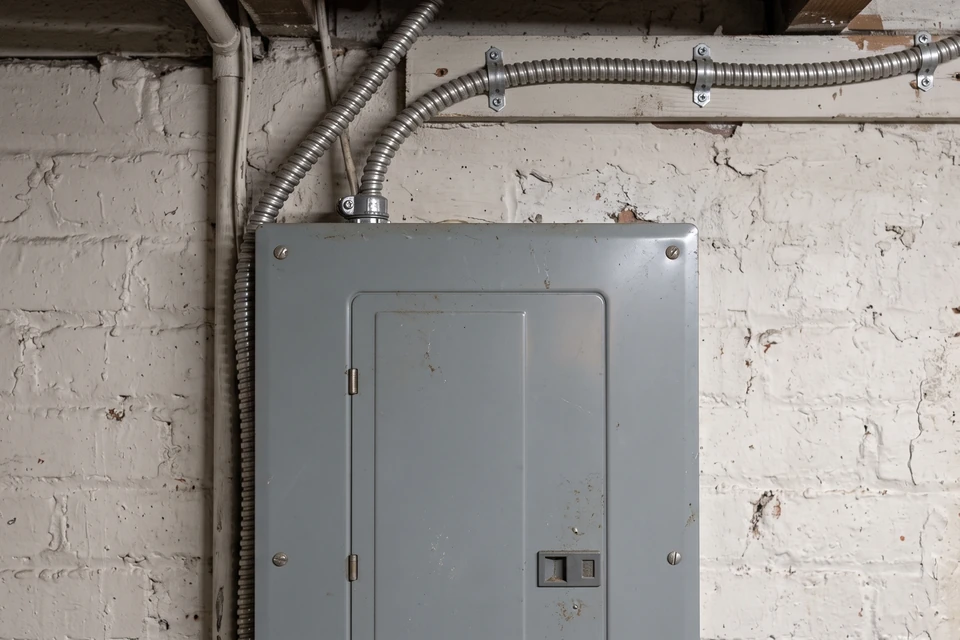
Start with the records from earlier work. A dated invoice is useful, but its description may be too general to establish which circuits were replaced. “Electrical upgrade” could include a panel change without replacement of the old branch wiring.
| Record | What it can help establish | What it does not establish on its own |
|---|---|---|
| Home inspection report | The visible finding that raised the question | The condition of every concealed circuit |
| Electrical assessment | Findings within the stated areas and methods | Matters outside its documented scope |
| Replacement contract and final invoice | What was contracted and charged for | That every item was completed or signed off |
| Contractor completion statement | The work and findings the author can support | Insurer acceptance of that evidence |
| DOB inspection or sign-off record | The status of the particular filed job | Replacement of wiring outside that job |
| Photographs | The documented work at identifiable locations | A complete circuit map or proof of disconnection everywhere |
Keep the documents together so the electrician can compare them. Where the records disagree, the discrepancy should be addressed rather than hidden under a new cover letter.
An assessment needs to answer the right question
A knob and tube inspection can begin with accessible areas and the existing documentation. Whether more investigation is needed depends on what the recipient is asking and what the electrician finds.
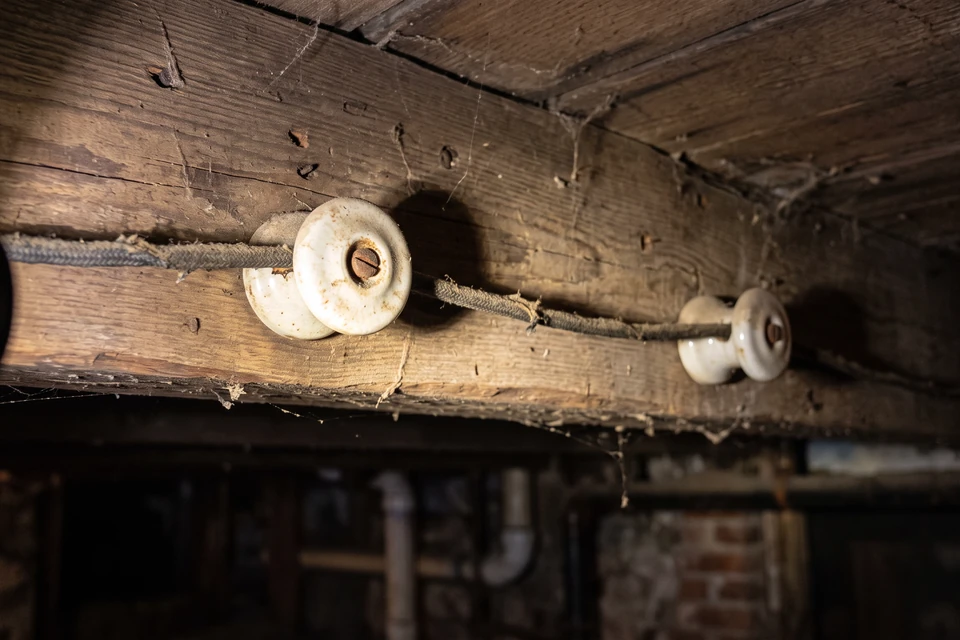
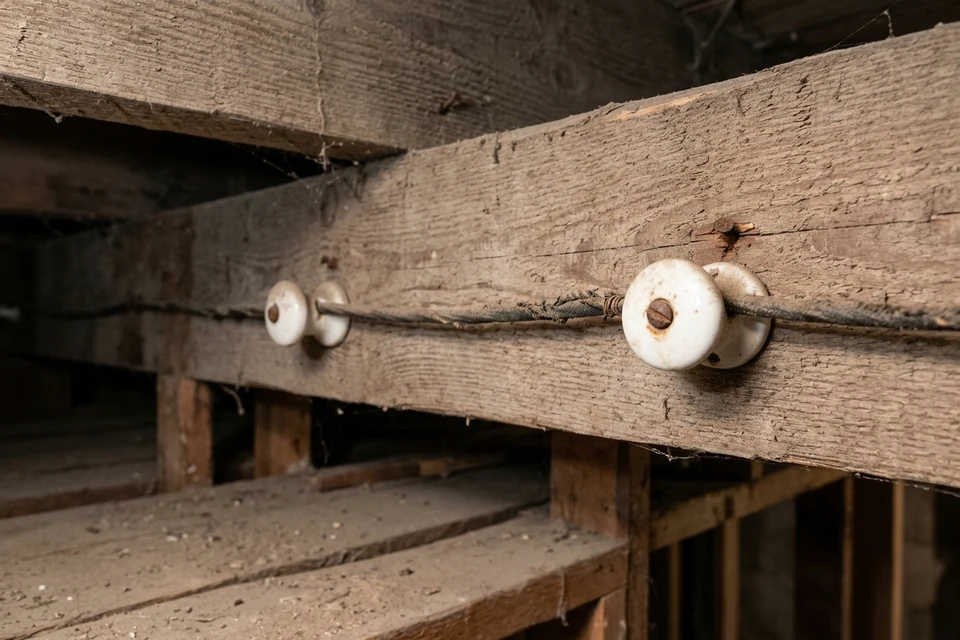
A visible disconnected end is not enough to establish that every old section is inactive. Similarly, an unused ceramic support is not evidence that an active circuit remains. The investigation must distinguish the actual wiring from material left behind after earlier work.
Ask what the proposed visit can reasonably establish. If the report will have limits because parts of the property cannot be accessed, you need to understand those limits before relying on it for a deadline.
Building access can matter as much as access within your own rooms. In an apartment, some relevant equipment or routes may be in shared areas. Management may need to arrange permission before the assessment can answer the question.
If replacement is required, document the completed work precisely
The replacement proposal should identify the circuits involved. Where the insurer has required all active K&T to be retired, a partial room rewire should not be presented as meeting that condition without the insurer’s agreement and supporting evidence.
After the work, request a description that distinguishes the new installation from any old wiring retained. Disconnected material left in a concealed space should be described accurately. Avoid treating the words “removed,” “abandoned” and “replaced” as interchangeable.
The responsible licensed contractor also needs to handle the applicable NYC permit and inspection process. Ask for the filed job reference and the actual completion status. NYC DOB’s owner checklist is a useful starting point for checking those responsibilities.
A final invoice and a passing inspection record serve different purposes. Keep both when they apply, with the circuit description that makes the work understandable to someone who did not attend the property.
Treat the deadline as a planning constraint
Tell us the date on the notice at the first conversation. It affects how quickly the unresolved questions need to be addressed, but it cannot establish access or guarantee a completion date.
If the requested work cannot be completed within the available time, speak with your insurer or agent about what it requires while the issue is being resolved. Do not assume that a booked appointment or signed contract automatically extends the deadline. Keep any response in writing.
Our insurance-deadline guide helps organize that conversation. It is especially useful when a proposed replacement still depends on building approval.
Documentation does not determine the insurance decision
Insurers apply their own underwriting requirements. Progressive’s electrical wiring explanation illustrates how older wiring can affect eligibility or replacement requirements. It is not a promise about another carrier’s decision.
The insurer decides whether the submitted evidence answers its condition. Neither a contractor letter nor a completed rewire guarantees a particular premium. Whether insurance pays for replacement is another question, governed by the actual policy and circumstances rather than the need for a letter.
If a notice concerns cancellation or nonrenewal, the New York Department of Financial Services explains the relevant consumer protections and complaint route. Ask the insurer or agent to explain how your notice applies rather than treating a website summary as your policy decision.
Bring the requirement, not just the form
When you get in touch, begin with the insurer’s wording and the reason the wiring was flagged. Mention previous electrical work even if its records are incomplete. We can help establish whether the immediate need is an assessment or a replacement proposal that can produce the required evidence.
Talk to us about the wiring documentation request. If an electrician has already declined to sign, include that explanation. It often reveals the question that still needs answering.
A closer look at wiring and access